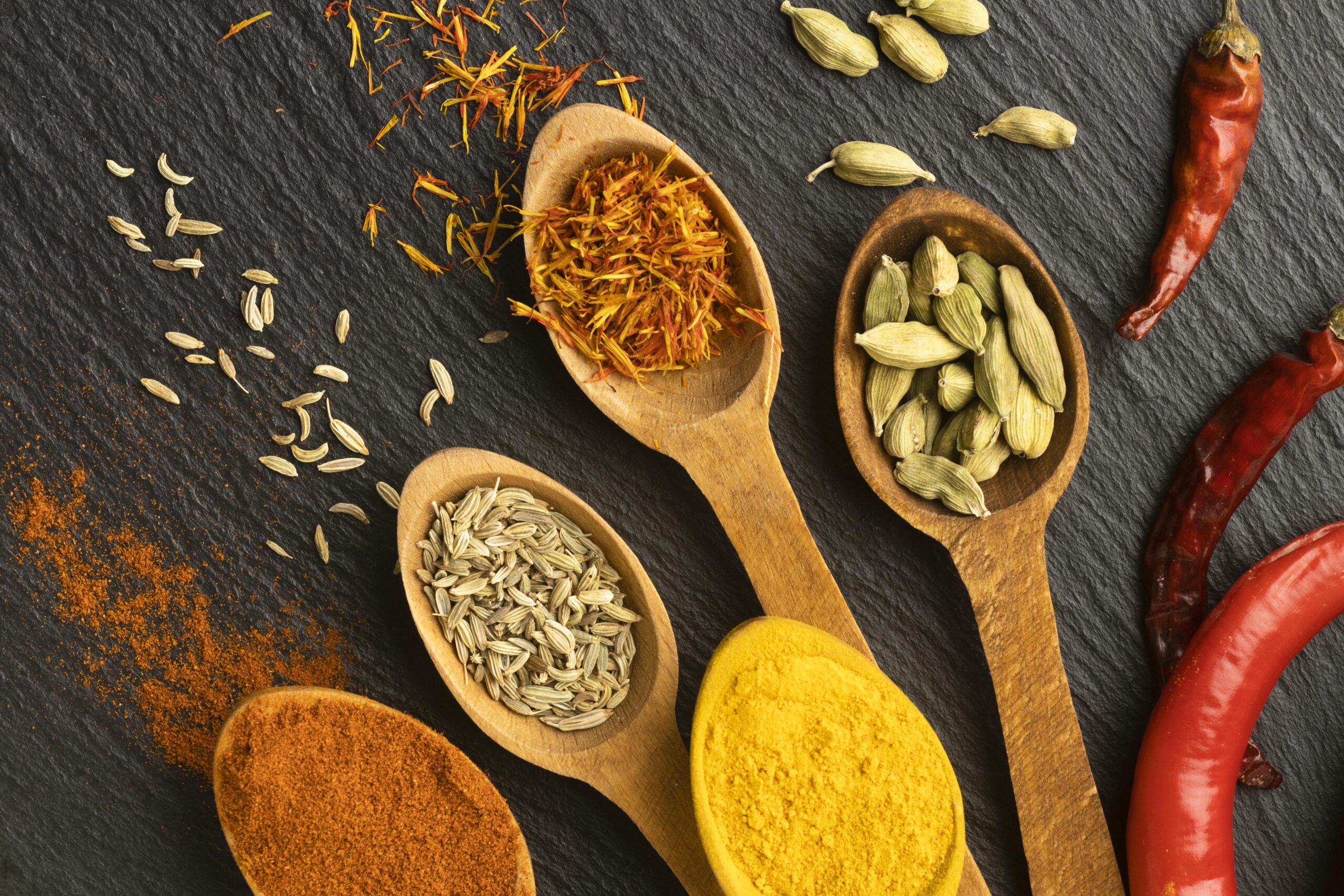
Most people’s first association with Indian spices is heat. But spice in Indian cooking is really about aroma, depth, and layers of flavor that build throughout the cooking process. The heat, when it appears, is just one part of a much bigger picture.
That complexity is what makes Indian Food so distinctive, and why the same base ingredients can produce dishes that taste completely different depending on how the spices are handled.
Understanding Indian Spices (Whole vs. Ground)
Before getting into the Indian spices list, it helps to understand that the same spice behaves differently depending on its form. Indian cooking uses two main formats, and the choice between them changes the outcome of a dish entirely.
1. Whole Spices (Khada Masala)
Whole spices, used in their unground form, such as cloves, cinnamon, and cardamom pods, are added at the very start of cooking through a technique called tempering or tadka. They go into hot oil first, before any other ingredients, so the heat draws out their essential oils within seconds. You will notice that it is working when you hear the oil crackling and smell the fragrance rising immediately. Those oils then become the flavor base that everything else is built on.
2. Ground Spices (Pisa Masala)
Ground spices come in later, added to the onion base or sauce as it cooks. Their fine texture helps them disperse evenly through the dish, adding beautiful color, body, and the layered warmth that Indian cooking is known for. Turmeric gives a gravy a more golden color. Chili powder deepens the color and makes the dish look more intense. Cumin and coriander together help round out the base.
Using both formats in the same dish is standard practice. They are not interchangeable because each does a different job at a different stage.
The Essential Indian Spices List With Pictures & Uses
Modern Fine Dining Sukhumvit restaurants and creative Indian kitchens have pushed the cuisine in new directions, but the spice foundation stays largely the same. Here is the Indian spice list with pictures or at least, the ten spices worth knowing before anything else.
1. Cumin (Jeera)
Earthy, slightly bitter, with a warmth that hits the back of the palate. Cumin is one of the most used spices in North Indian Food, typically tempered whole in oil at the start of cooking. It also appears in dal, biryani, and raita.
2. Coriander Seeds (Dhania)
Bright and citrusy with no sharp edge. Usually toasted and ground before use, and almost always paired with cumin to balance it. A key part of the base is tikka masala, korma, and most vegetable curries.
3. Turmeric (Haldi)
Turmeric provides an earthy and slightly bitter taste, along with a distinctive golden colour. Used in small amounts across almost every dish in marinades, curry bases, and lentils. It does not dominate flavor but changes the color and rounds out the other spices.
4. Cardamom (Elaichi)
Floral and citrusy with a cool finish. Cardamom pods go into hot oil early in the cooking process, releasing their aroma into the oil before the rest of the ingredients follow. Also a key ingredient in masala chai and Indian desserts.
5. Black Cardamom (Badi Elaichi)
Black Cardamom gives a smoky and woody scent with a deeper intense profile than green cardamom. It’s been used with rich meat dishes like rogan josh. It adds a smoky undertone and handles the heaviness of red meat well.
6. Cinnamon (Dalchini)
Cinnamon sticks are known as warm and sweet with a gentle heat. They are typically added to hot oil at the start of cooking, used to build the base for biryani, masala curries, and butter chicken sauce.
7. Cloves (Laung)
Intense and slightly numbing on the palate. Used sparingly alongside cinnamon and cardamom in the initial tempering stage. A small amount goes a long way in biryani and layered meat gravies.
8. Mustard Seeds (Rai)
Cooked mustard seeds are crunchy and pungent. Mustard seeds are a staple of South Indian Food popped in hot oil until they split open and release their flavor. The base for sambar, coconut sauces, and potato stir-fries.
9. Fenugreek Seeds (Methi)
Fenugreek Seeds are bitter raw, but when toasted over low heat, they develop a caramel-like sweetness. A key Indian seasoning in vegetable dishes and specific curry blends, particularly in Vegetarian Indian Food cooking where they add depth without relying on meat-based stock.
10. Nigella Seeds (Kalonji)
Mild and slightly oniony, with a texture similar to sesame. Sprinkled on naan before it goes into the Tandoori oven, or tempered in oil and added as a finishing element over dal and vegetable dishes.
Iconic Indian Spice Blends (Masalas)
What makes Indian spice mix culture distinctive is not just the individual spices but how they are combined. Each blend is designed for a specific purpose, and swapping one for another changes the dish considerably.
- Garam Masala. a warming blend of cumin, coriander, cloves, cinnamon, and cardamom. Added at the end of cooking to lift the aroma of a finished dish rather than building the base.
- Chaat Masala. built around black salt and dried mango powder, giving it a sour, salty, slightly tangy profile. Used as a finishing sprinkle on street food and snacks.
- Tandoori Masala. turmeric, Kashmiri red chili, and cloves as the core, mixed with yogurt, garlic, and ginger to form the marinade that goes on meat before it hits the clay oven. Responsible for both the color and the flavor of tandoori-style dishes.
- Panch Phoron. five whole spices used unground: cumin, mustard, fenugreek, nigella, and fennel. Tempered in oil at the start of cooking, particularly in eastern Indian cuisine, for a complex and slightly crunchy base.
- Madras Curry Powder. a Southern-style blend heavy on turmeric and roasted red chili. Used as the base for dry-style curries and coconut-milk gravies.
- Biryani Masala. a more delicate blend built around star anise, green cardamom, mace, and cloves. Designed specifically to complement long-grain rice without overpowering it.
How Indian Spices Elevate Restaurant Cooking
The difference between a good Indian restaurant and a great one often comes down to how spices are handled rather than which ones are used.
In professional kitchens, whole spices are added in sequence according to how much heat they need to release their flavor. A black cardamom needs longer exposure to low heat than a cumin seed. That sequencing builds a more layered result than adding everything at once. The same principle applies to slow-cooked dishes such as a lamb shank braised overnight with whole spices absorbs flavor in a way that a quick cook cannot replicate.
At a Modern Indian Restaurant Bangkok, this understanding of spice technique tends to show up in how a dish is constructed rather than just what goes into it. The spice blend matters, but the order, temperature, and timing matter just as much.
Finch Bangkok works within this tradition, using Indian spice combinations across a menu that draws from both North and South Indian cooking. For anyone looking for an Indian spice restaurant experience that goes beyond the standard curry format, it is a reasonable place to explore what Indian spicing can do at a more considered level.
Frequently Asked Questions About Indian Spices
Are all Indian spices hot or spicy?
No. Most Indian spices are about aroma rather than heat. Cardamom is floral. Cinnamon is sweet. Coriander is citrusy. The spices that actually add heat are chili-based, and those are just one part of the broader Indian seasoning palette. For anyone new to Indian cooking, starting with spices like cumin, coriander, and turmeric gives a good sense of the cuisine without the heat.
What is the best way to store Indian spices?
Airtight glass jars kept away from direct sunlight and moisture. Ground Indian spice mix blends lose their potency faster than whole spices, so it is worth buying ground spices in smaller quantities and replacing them more frequently. Whole spices last considerably longer when stored correctly.
Can I make my own Indian spice blend at home?
Yes, and the result is noticeably better than pre-mixed versions. Toast whole spices in a dry pan over low heat until fragrant, let them cool completely, then grind. The freshness of the aroma makes a real difference, and it gives you control over the balance of flavors in a way that pre-ground blends do not.