South Indian food has been gaining ground in Bangkok for a while now, and it is not hard to see why. The cuisine is built on rice, lentils, coconut, and tamarind with spicing that feels cleaner and brighter than most Indian food Thais are already familiar with. For anyone who enjoys dishes with a sour-tangy base, it tends to click pretty quickly.
It is also one of the more naturally plant-forward cuisines around, which has helped it reach a much wider audience. Whether you are vegetarian, just curious, or looking for something genuinely different from the usual options in Bangkok, South Indian food is worth knowing before you order.
What Is South Indian Food and Where Does It Come From?
South India covers five states like Tamil Nadu, Kerala, Karnataka, Andhra Pradesh, and Telangana, each with its own style, but all sharing the same foundation. The region has a tropical climate, abundant rice, coastline access, and a long tradition of vegetarianism tied to Hindu and Jain practice. That combination shaped the food more than anything else.
The spice trade also played a big part. South India, particularly Kerala, was one of the most important spice-producing regions in the world. Black pepper, cardamom, turmeric, and curry leaves were not imported and they were grown locally and used generously. That history still shows up in the food today.
Unlike North Indian food, which was heavily shaped by Mughal influence and features wheat breads, cream-rich gravies, and tandoor cooking, South Indian food stayed closer to its pre-Mughal roots. The result is something that feels lighter on the palate but no less layered in flavor.
How South Indian Food Differs from Other Regional Cuisines
Most people in Bangkok have tried butter chicken or naan at some point, so their first reference for Indian food tends to be Northern. South Indian food works quite differently, and the gap goes beyond geography.
- Rice over wheat. The foundation of almost every South Indian meal is rice, not bread. Idli, dosa, and steamed rice served with sambar are the everyday staples. Wheat-based breads exist but are not the default.
- Fermentation as a technique. Many South Indian dishes rely on naturally fermented batters, which creates a mild sourness and makes the food easier to digest. This is not a modern health trend, it is how the food has been made for centuries.
- Coconut in almost everything. Coconut milk, grated coconut, and coconut oil are used across the region in ways that are much more prominent than in Northern cooking. Kerala cuisine in particular is defined by it.
- Curry leaves and mustard seeds as the base. If you smell mustard seeds popping in hot oil followed by fresh curry leaves, you are almost certainly eating South Indian food. This tempering technique appears constantly and creates a very distinctive aroma.
- Tamarind for sourness. Where Northern cooking often uses yogurt or tomato for acidity, South Indian food uses tamarind. It shows up in sambar, rasam, chutneys, and rice dishes, giving the cuisine its characteristic tang.
These are not just Indian food markers but they are specifically Southern ones. A restaurant serving largely Northern-style dishes will not show most of these, even if it includes one or two Southern items on the menu.
Traditional vs. Modern South Indian Food: How Much Has Changed?
South Indian food has been interpreted in a lot of ways outside its home states, and the gap between traditional and modern versions can be significant depending on where you eat.
| Traditional | Modern / Adapted | |
| Base ingredients | Rice, lentils, coconut, tamarind | Same, sometimes supplemented with quinoa or other grains |
| Cooking method | Steaming, slow simmering, tawa griddle | Tandoor added, fusion techniques introduced |
| Flavor profile | Sour-tangy-aromatic, moderate heat | Often adjusted milder or richer for broader audiences |
| Presentation | Banana leaf, simple plating | Fine dining plating, molecular elements |
| Bread accompaniment | Rice-based flatbreads, appam | Sometimes replaced with naan or paratha for familiarity |
The core ingredients rarely change. What shifts is technique, presentation, and how closely the spice balance follows a specific regional tradition. A modern kitchen might serve traditional South Indian food recipes reimagined with fine dining plating, or pair curry leaf tempering with ingredients like truffle.
That is a different kind of product, which is just a different intention. The real question is whether the foundational flavors are still doing the work, or whether the Indian elements have become decoration.
How to Tell If a Restaurant Is Serving Genuine South Indian Food
If you are not familiar with the cuisine and the menu does not say that it’s a South Indian food menu, it can be hard to know whether a restaurant is genuinely South Indian or just offering a few Southern items alongside a largely Northern menu. A few things worth looking for:
Rice-Based Staples Are at the Center of the Menu
Dosa, idli, sambar, and rasam are the clearest indicators. If these are treated as main dishes rather than sides, the kitchen is probably grounded in Southern cooking. A menu built primarily around naan and tandoori items is a Northern-leaning kitchen, even if a dosa appears somewhere on the list.
Curry Leaves and Mustard Seeds Show Up in the Descriptions
These two ingredients are almost inseparable from South Indian cooking. If you see them mentioned in how dishes are prepared especially in tempering, that is a reliable sign the kitchen knows the cuisine.
The Sourness Comes from Tamarind
Most South Indian curries and soups carry a background sourness from tamarind. If the sambar or rasam mentions it as a core ingredient, the kitchen understands what it is making. Versions that skip tamarind entirely tend to taste noticeably different.
The Vegetarian Section Has Real Depth
South Indian cuisine is naturally rich in vegetarian cooking which is not just paneer dishes, but lentil preparations, vegetable curries, and rice-based dishes. If the vegetarian menu has genuine range, that is usually a good sign.

Where to Find South Indian Food in Bangkok? A Fine Dining Option Worth Knowing
For those looking for a South Indian food restaurant in Bangkok with a more considered approach, Finch Bangkok is one place worth knowing. The menu draws from multiple Indian traditions, and several dishes reflect Southern flavors clearly.
A few worth trying if you are exploring that direction:
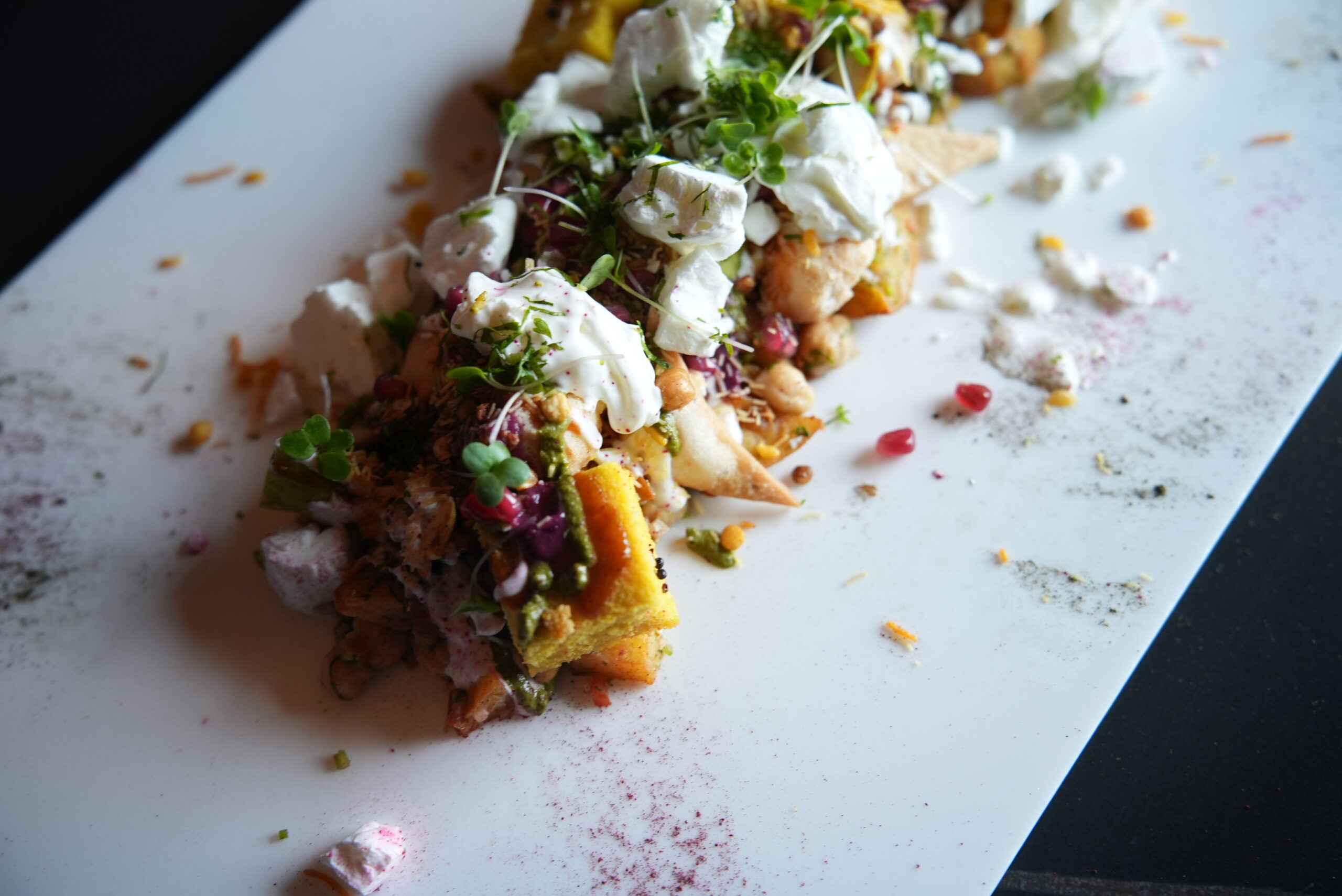
- Palak Patte Ki Chaat: Baby spinach in gram flour batter, deep fried, topped with mint chutney, tamarind chutney, sev, sweet curd, and pomegranate. The combination of sour, sweet, and spiced elements is a good introduction to how South Indian street food handles flavor. A solid starting point for first-timers.
- Kolkata Puchka Shots: Fried flour balls filled with white peas, served with mint water, tamarind water, and two chutneys. The dual-water format is specific to the Kolkata version of pani puri. One of the more fun starters on the Indian lunch set side of the menu.
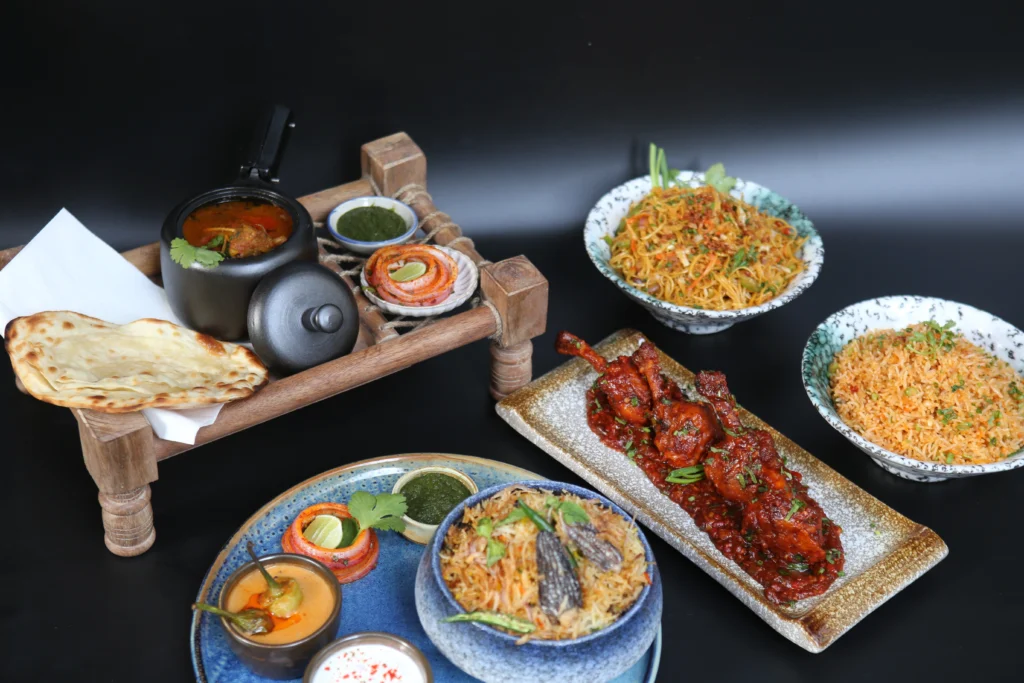
- Kathal Dum Biryani: Young jackfruit cooked with fragrant rice in a dum pot, served with mirch baingan ka salan and burhani raita. Jackfruit biryani is common in South Indian vegetarian cooking, particularly in Kerala and Tamil Nadu. This is probably the most direct South Indian item on the biryani list.
- Guchhi Biryani: Himalayan morel mushrooms with long-grain rice, slow-cooked in a sealed dum pot. The dum method is one of the foundational biryani techniques, and the mushroom version here is worth trying if you want to understand how rice and spice can carry a dish on their own.
- Dal Makhani: Black lentil cooked overnight with whole spices, finished with butter and cream. Technically a Punjabi dish, but the slow cooking approach shares the same patience that defines good South Indian dal. If you want to understand how lentils can be the center of a meal rather than a side, this is a good place to start.
If you want to explore the menu more fully, the 9-course tasting menus give a structured path through several of these flavors in sequence including a sorbet course and a live dessert at the table. A good option if this is your first time at Indian Fine Dining Bangkok Restaurant.
FAQ about South Indian Food
Is South Indian food suitable for vegans?
Most of it is naturally vegan Indian or easy to adapt. The staple dishes like dosa, idli, sambar, or rice with vegetable curries are typically made without dairy. The main thing to watch for is ghee, which is used in some preparations and not always listed. At Finch, the dal and some breads use butter or cream, so it is worth checking with the kitchen if you are strictly vegan.
Is South Indian food easy to find in Bangkok?
There are dedicated South Indian restaurants in Bangkok, mostly concentrated around Silom, Sukhumvit, and Phahon Yothin. For a more composed dining experience that draws on South Indian flavors within a fine dining format, options are more limited. Finch is one of the places worth the trip.
Can you cook South Indian food at home?
The ingredients are more accessible than most people assume. Curry leaves, tamarind paste, urad dal, and rice flour are available at Indian grocery stores around Phahon Yothin, and some branches of Villa Market and Tops carry the basics.
The techniques are not complicated. You can temper Indian spices in hot oil, make sambar, and ferment a dosa batter. The main thing that takes getting used to is patience. A proper dosa batter needs 8 to 12 hours of fermentation. If you are starting out, dal tadka is the most forgiving South Indian recipe to try at home.
What is the difference between South Indian food and what most restaurants in Bangkok serve?
Most Indian restaurants here are rooted in Northern cooking like tandoori meats, naan, cream-based gravies. South Indian food is a separate tradition with different base ingredients, different techniques, and a different flavor profile.
The simplest way to think about it: if the menu centers on bread and cream gravy, it is probably Northern. If it centers on rice, lentils, and tamarind, it is more likely Southern. For a fuller breakdown of the two, the North Indian vs. South Indian Food guide covers the differences in more detail.