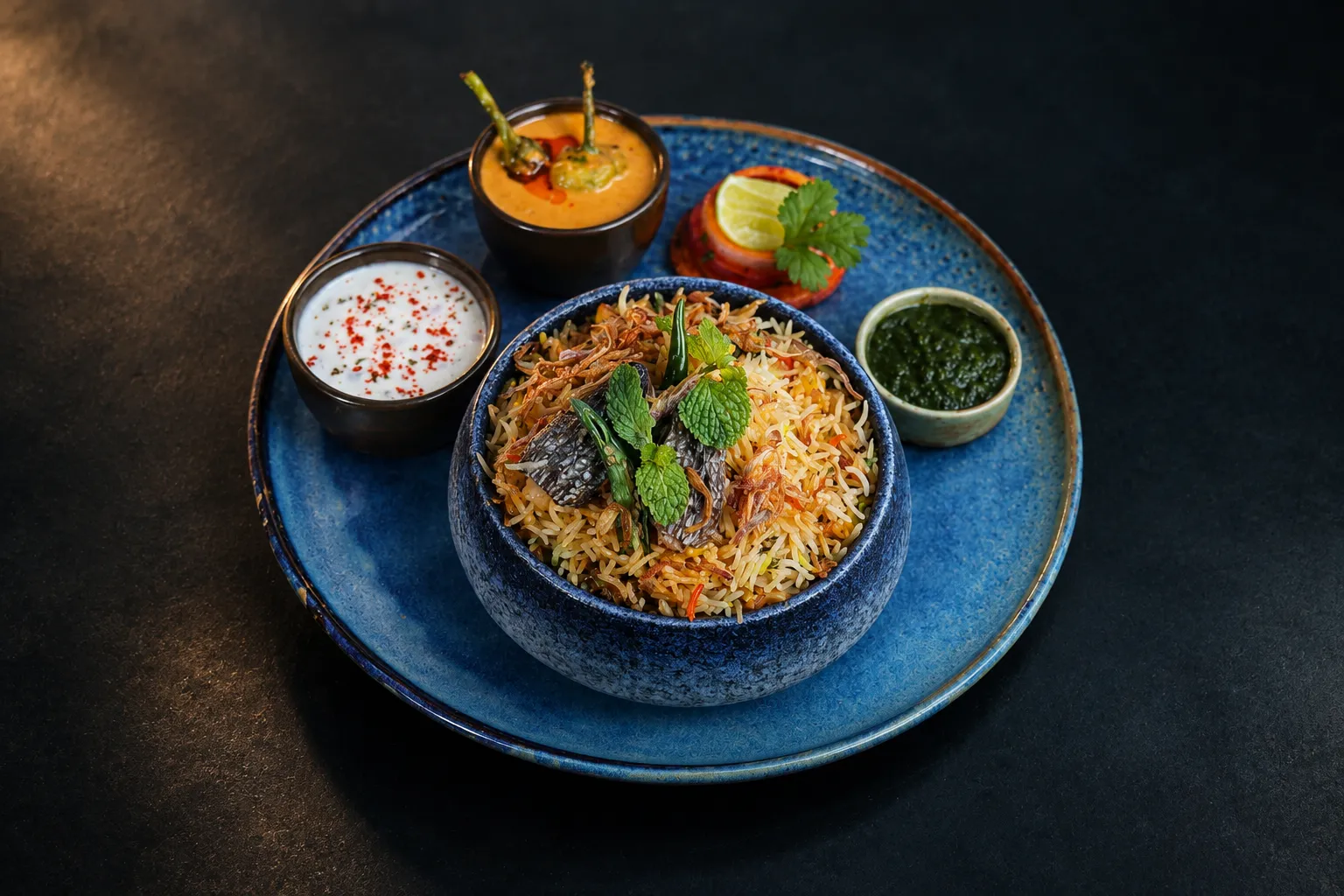
Biryanis are not just rice with meat on top. They are layered dishes with a long history, built on fragrant long-grain basmati, marinated meat or vegetables, and a spice blend that takes real skill to balance.
Few dishes travel as well. From Hyderabad to London, biryani food has become one of the most ordered Indian meals in the world. When people think of Indian rice dishes, the classic biryani chicken biryani variation is usually the first that comes to mind.
If you are exploring Indian Food Bangkok, biryani is a dish worth understanding properly.
What Makes Authentic Biryani So Special? The Secret of Dum Cooking
Let’s start with Dum Pukht. Dum means slow steaming in a sealed vessel. Par-cooked rice, marinated meat, and fresh spices go into a heavy biryani pot in layers, traditionally clay or thick-bottomed metal.
The lid is sealed with a strip of dough. Steam and aromatic oils stay trapped inside, and the rice finishes cooking in the juices of the meat below it. Low heat and patience do the work.
Next is aromatics. The blend is what gives biryani spice its signature depth. Saffron, green cardamom, mace, coriander seed, cloves, and cinnamon are common, and every kitchen guards its own ratio. For a closer look at each one, see our guide to Indian Spice.
Lastly, the rice. Aged basmati is the standard. The grains are long, dry, and firm, so they stay separate and absorb steam without turning soft.
Popular Types of Biryanis You Should Know
Biryani changes from region to region, much like the differences covered in North Indian vs. South Indian Food. Here are the styles worth knowing.
- Hyderabadi Biryani and Dum Variations. Hyderabadi biryani comes from the kitchens of the Nizams and is one of the great dishes of South Indian Food culture. It is known for bold spice, saffron, and smoky depth. The classic chicken dum biryani follows this method. The chicken and rice cook together under seal until the meat turns tender and falls off the bone.
- Classic Chicken Biryani is the most popular style everywhere. A yogurt marinade tenderizes the meat and gives the gravy a mellow tang that balances the spice.
- Mutton and Lamb Biryani uses goat or mature sheep. The meat is richer and needs a longer, slower cook to turn tender.
- Lamb biryani uses younger meat. It is milder, softer, and cooks faster, which suits those who prefer a gentler flavor.
- Awadhi Biryani. From Lucknow, this style is gentler and more perfumed than fiery. It is a refined example of North Indian Food tradition.
- Vegetable and Veg Biryani. Veg biryani is no compromise. A well-made vegetable biryani uses seasonal vegetables, paneer, mushroom, or jackfruit, and follows the same dum method. The spice and steam carry the dish.
Pairing Biryani with Complementary Delicacies
Biryani is rich, so the sides matter. Raita, a cool yogurt with cucumber and light spice, cuts through the heat and the fat.
A simple onion salad adds crunch and sharpness. A tangy gravy like mirch baingan ka salan, made with chili and eggplant, adds another layer.
For a fuller table, add tandoori kebabs. The smoky char from the clay oven pairs well with the soft, steamed rice.
Experience Elevated Biryanis at Finch Bangkok
Finch sits on Sukhumvit Soi 11 and treats biryani as a showpiece dish. It is a good example of Indian fine dining Bangkok done with a modern hand. The biryanis are cooked with long-grain fragrant rice and aromatic spices in a dum pot.
- Gucchi Biryani. Himalayan morel mushrooms, served with homemade chutney and burhani raita.
- Kathal Dum Biryani. Young jackfruit, served with mirch baingan ka salan and burhani raita.
- Hyderabadi Chicken Biryani. A regional classic with the same sides.
- Kolkata Gosht Biryani. Finch’s version of the Kolkata style, served with salan and raita.
If you are searching for something like “An authentic biryani near me” in Sukhumvit, Finch Bangkok is an easy choice for Indian Restaurant . For the full list of dishes, Explore Our Menu.
Frequently Asked Questions About Biryanis
What is the difference between biryani and pulao?
Biryani layers separately cooked components and finishes them with dum cooking. Pulao cooks the rice together with meat or vegetables in a single pot.
Why is basmati rice used for biryani?
Basmati grains are long, dry, and firm, so they stay separate. They also absorb steam and spice aroma very well.
Is Hyderabadi biryani always spicy?
It has a stronger spice profile than most regional styles. The heat itself depends on the chilies used and can be adjusted.