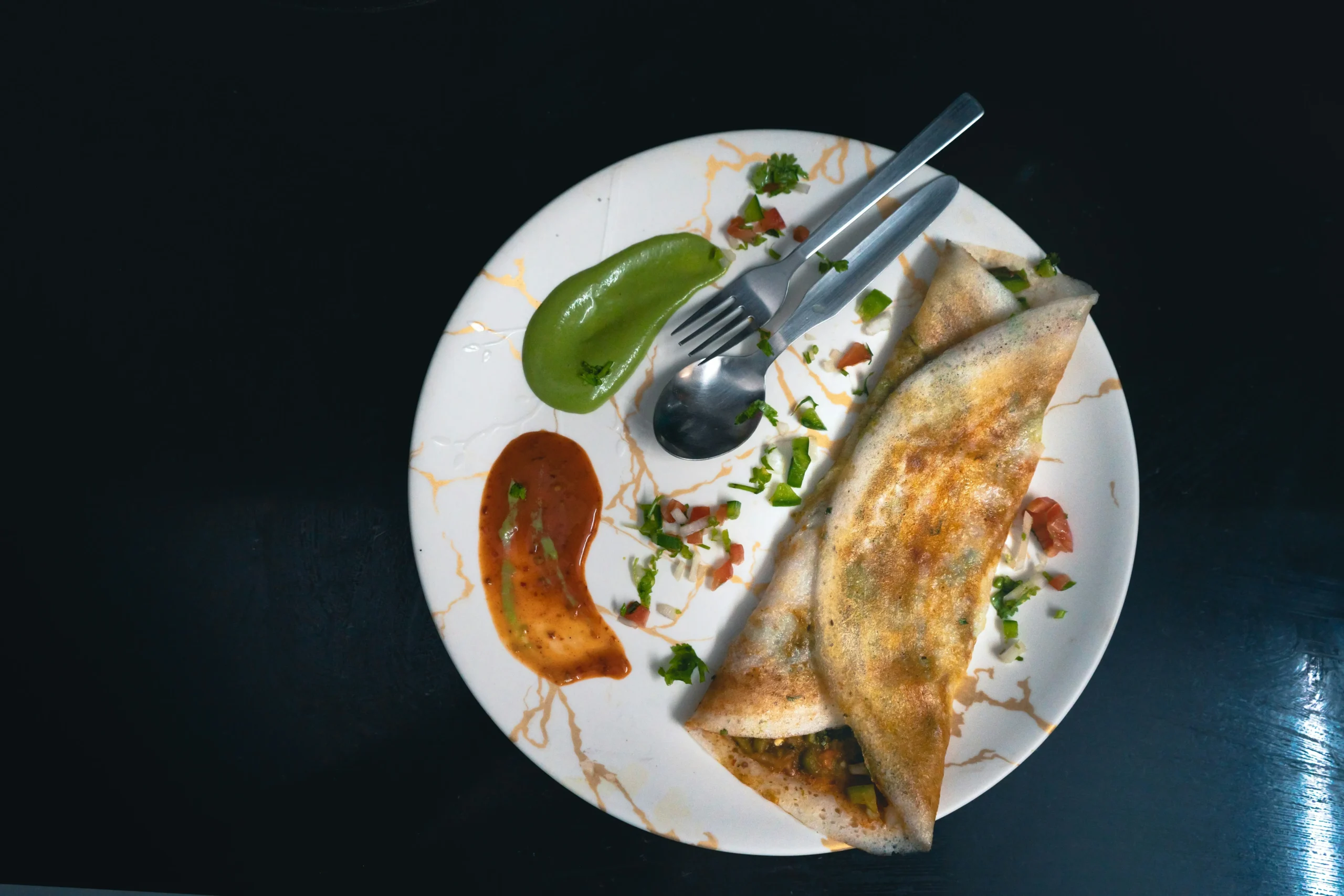
Picture a golden, paper-thin crepe, folded or rolled, with a crackle you can hear from across the table. That is ‘DOSA’, and it has been a breakfast staple in dosa India for centuries. Today it is also one of the most loved items in dosa Indian food worldwide, from street stalls in Chennai to restaurant tables across Bangkok.
Anyone who has ordered one knows the feeling. The edges shatter, the center stays soft, and a little sourness keeps you reaching for another bite. It is no surprise that dosas tend to steal the show at any table.
Behind that crunch sits a fermentation method refined over generations. If you are exploring Indian Food Bangkok, this guide walks you through everything, from the batter to the first bite.
What Is a Dosa, Exactly?
A dosa is a thin South Indian crepe made from fermented batter. The batter is a simple mix of rice and lentils, ground with water and left to ferment until it turns bubbly and slightly tangy. Nothing else is needed.
It is a signature of South Indian Food, especially in Tamil Nadu, Karnataka, Kerala, and Andhra Pradesh. North Indian Food leans on wheat breads like roti and naan, while the south builds its breakfasts around rice and lentils.
How does it differ from a Western crepe? A French crepe uses wheat flour, milk, and eggs, and it is soft and buttery. A dosa uses no eggs and no dairy in the batter. The result is crisp, light, and gently sour, with a flavor that comes from fermentation rather than fat.
What Are the Main Dosa Ingredients?
The core dosa ingredients are short. Rice and urad dal (split black gram) make up the batter, with a pinch of fenugreek seeds and salt. Water brings it together. A common ratio is about three or four parts rice to one part urad dal.
The rice gives the dosa its crisp structure. The urad dal gives it body, protein, and the natural stickiness that holds the batter together on the pan. Both are soaked for several hours, then ground until smooth.
So what kind of batter is dosa made of? A fermented one. After grinding, the batter rests overnight in a warm spot. Wild yeast and friendly bacteria feed on the starch and produce tiny air bubbles, which is what makes a dosa crisp outside and soft inside.
Fun Fact: How Are Dosa and Idli Related?Dosa and Idli share almost the same batter. The difference is in how it is cooked. Dosa is spread thin on a hot griddle and turns crisp. Idli is steamed in small molds and turns soft and fluffy. Cooks often adjust the proportions slightly, with a thicker batter for idli dosa pairings that need height and a thinner one for dosa. Many South Indian households make one big batch and use it for both across the week. For busy kitchens, dosa flour is a modern shortcut. It is a pre-mixed blend of rice flour and lentil flour that skips the soaking and fermenting. It will not match the depth of a naturally fermented batter, but it is quick and works well for a weeknight. |
How Is Dosa Made? From Batter to Griddle
Dosa making is as much about technique as ingredients. A good dosa recipe starts with the batter, but the pan is where the skill shows.
1. Preparing the Dosa Batter
Rinse the rice and dal separately and soak them for four to six hours. Grind them with water into a smooth, pourable dosa batter, then add salt and let it ferment overnight, or around eight to twelve hours. It is ready when it has risen and smells pleasantly sour.
How do you make homemade dosa batter in a short time? – Keep the bowl in a warm place and use a large container, since the batter can double in volume!
2. Spreading and Cooking
Heat a flat griddle, known as a tawa, until a drop of water sizzles and vanishes. Pour a ladle of batter in the center and swirl it outward in a spiral to form a thin, even circle.
Drizzle a little oil or ghee around the edges. Cook on medium heat until the underside turns deep golden and the edges lift. A thin dosa does not need to be flipped.
What Are the Most Popular Types of Dosas?
The dosa family is big, and each member has its own personality. These are three you will see most often.
- Masala Dosa. The timeless classic, a crisp crepe filled with spiced potato, onion, and mustard seeds. This filling is known as masala dosa masala, and the full dish is often written as dosa masala dosa on menus. In parts of Southeast Asia, you will see it spelled as Tosai Masala.
- Paneer Dosa. A rich, protein-packed favorite. Crumbled paneer dosa filling is mixed with onion and spice, and it suits anyone who wants something more indulgent than potato.
- Rava Dosa. Made with semolina in place of fermented batter, dosa rava gives you a lacy, extra-crisp texture. It needs no overnight fermenting, so it is ready much faster.
Is Masala Dosa Spicy, and Which One Is Best?
Is dosa masala spicy? Not usually. The potato filling is warm and aromatic, with onion, turmeric, and mustard seeds doing the work rather than chili. Heat mostly comes from the chutney or from extra green chili if you ask for it.
So… which masala dosa is best? It depends on your taste. For a first order, the classic potato version is the safest choice. Once you know the base flavor, move on to paneer or rava styles.
How Do You Eat Dosa the Right Way?
There is no wrong way to eat a dosa. Everyone has a favorite. But if you want to eat it the way locals do, a few habits are worth knowing.
First, tear off a piece with your hand and use it to scoop. Dip it into hot sambar, a tangy lentil and vegetable stew, then into coconut chutney or a tomato chutney. Switch between them as you go.
The pairing works because each element plays a role. The crisp dosa is the base, sambar adds depth, and the chutney brings freshness. A balanced mix of Indian Spice runs through all three, from mustard seeds to curry leaves.
What Is the Difference Between Homemade and Restaurant-Style Dosa?
Both are worth trying, but they are not the same experience.
- Homemade. You can follow any dosa recipe at home and control the heat and the oil. The challenge is timing. The batter needs the right fermentation, and the pan needs the right temperature, so the first few dosas are usually practice rounds.
- Restaurant-style. A professional kitchen cooks on a wide, well-seasoned griddle and makes hundreds of dosas, so the thickness is even and the crisp is consistent. It is served hot, with sambar and fresh chutneys made to a traditional recipe, so you can simply enjoy it.
The same applies to other Indian cooking methods. A clay oven like the Tandoori tandoor is hard to replicate at home, just as a restaurant dosa pan is.
Where Can You Try Regional Indian Flavors in Bangkok?
You do not need to fly to India to explore its regional cooking. Finch is a Modern Indian Restaurant on Sukhumvit Soi 11, where traditional dishes and contemporary ideas share the same menu.
The menu leans toward North Indian classics and modern small plates, with a few South Indian touches. The Idli Chilli Dry, also served as a Manchurian, uses the same fermented idli base from this guide, crisp-fried and tossed in sauce.
For guests looking for Indian fine dining Bangkok with a relaxed feel, it is an easy choice. It is also a welcoming Indian Restaurant for first-timers who want to try a bit of everything. To see all the dishes, Explore Our Menu.
Frequently Asked Questions About Dosa
Is dosa healthy or junk?
It is a healthy choice. Fermentation makes it easy to digest, and the lentils add protein and complex carbohydrates. A plain dosa is light, while rich fillings and extra ghee make it heavier.
How do I make homemade dosa batter?
Soak rice and urad dal separately, grind them smooth, mix with salt, and ferment overnight in a warm place. The batter is ready when it rises and smells slightly sour.
Is masala dosa healthy or unhealthy?
It is healthy in moderation. The crepe itself is light, so the potato filling and the amount of oil or ghee decide how rich it becomes.
Is dosa masala spicy?
Usually not. The potato filling is warm and aromatic rather than hot. Chutney and extra chili are what add the heat.